Concrete tile roofing is a familiar sight across South Florida, from Mediterranean-style homes with barrel tile to contemporary properties with clean, flat profiles. The material offers lasting curb appeal, but a successful tile roof depends on much more than the tile itself. The roof deck, underlayment, flashings, fastening system, drainage details, and installation quality all work together as one system.
This homeowner guide explains how to compare concrete tile profiles, manufacturers, installation details, and maintenance needs before selecting a new roof in Broward, Palm Beach, or Miami-Dade County.
What Is Concrete Tile Roofing?
Concrete roof tiles are made from cement, sand, water, and pigments that are molded and cured into individual roofing units. Manufacturers offer multiple profiles, textures, and colors, allowing concrete tile to complement both traditional and modern architecture.
The tiles form the visible, weather-shedding surface of the roof, but they are not the only water-management layer. The underlayment beneath the tile is a critical part of the assembly. Flashings, valleys, roof penetrations, edge details, and proper drainage are equally important.
Homeowners comparing systems can also review Allied Roofing’s residential tile roofing information and learn what is involved in a complete South Florida roof replacement.
Concrete Tile Profiles for South Florida Homes
High-profile barrel tile
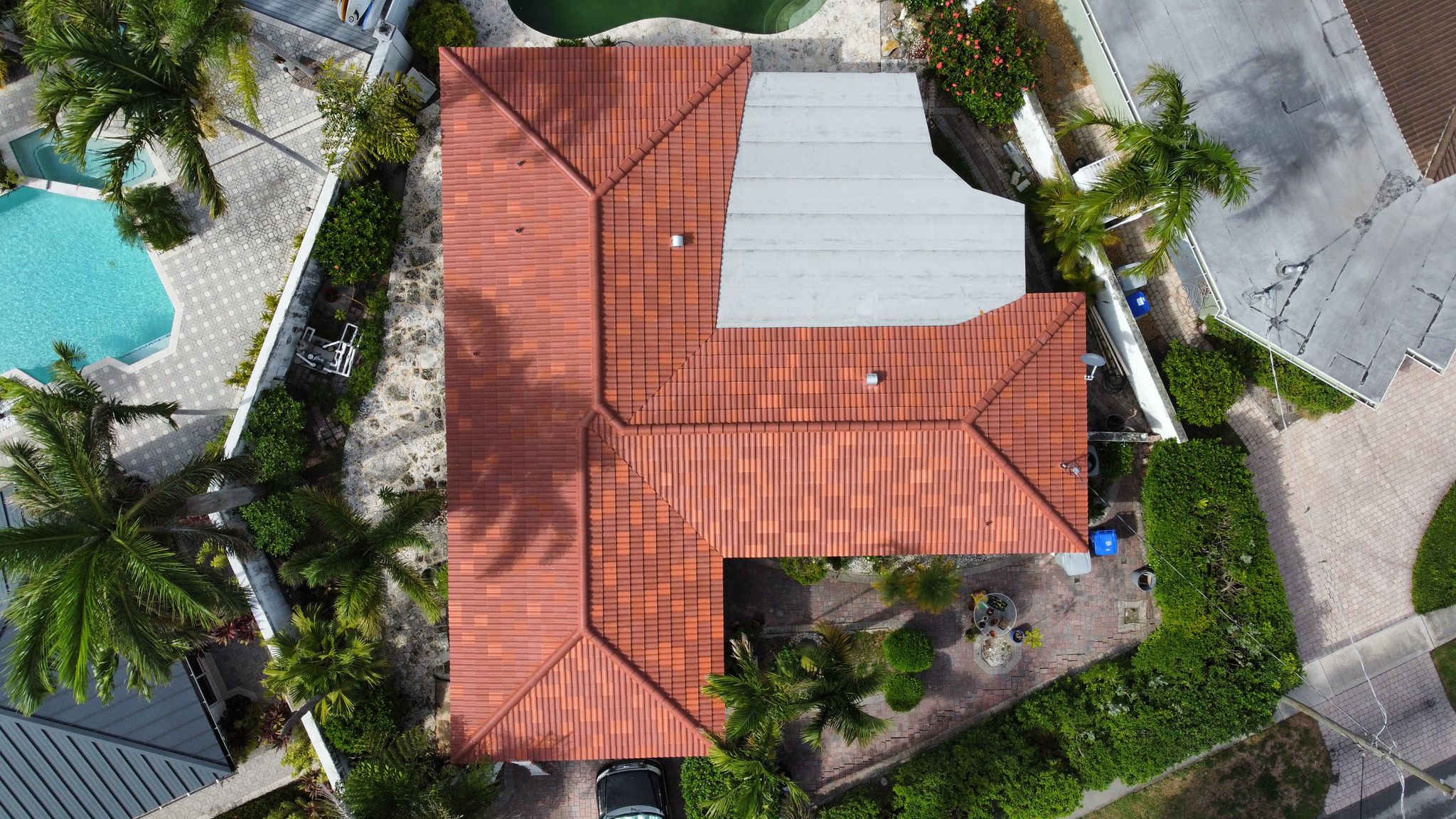
High-profile tile has a pronounced curved shape that creates deep shadow lines and the classic Spanish or Mediterranean appearance common throughout South Florida. The shape can add strong architectural character, but the roof layout, transitions, hips, ridges, and accessories must be carefully coordinated.
Low- and medium-profile tile
Lower-profile options provide some curvature with a more restrained appearance. They can work well on homes that need dimensional texture without the full visual depth of a traditional barrel profile.
Flat tile
Flat concrete tile creates a clean, streamlined roof plane and may resemble slate or shake depending on the surface texture and installation pattern. It is often selected for contemporary, transitional, or modern coastal homes.
Appearance is only one part of the decision. The selected tile and installation method must be appropriate for the roof slope, approved assembly, building location, and project specifications.
Comparing Westlake Royal, Eagle, and Crown Tile Options
Westlake Royal Roofing Solutions, Eagle Roofing Products, and Crown Roof Tiles offer concrete roof tile products used in Florida. Each manufacturer has its own profile families, colors, textures, accessories, product approvals, and availability. The best choice is the one that fits the home’s architecture and the permitted roof assembly—not simply the brand name.
Westlake Royal Roofing Solutions
Westlake Royal offers concrete tile in traditional and contemporary profiles. Homeowners should compare the specific profile, color blend, texture, current Florida product documentation, and matching trim pieces available for their project.
Eagle Roofing Products
Eagle produces concrete tile in barrel, low-profile, and flat-style designs. When reviewing an Eagle option, confirm the exact product line, color, regional availability, and approved installation details with the roofing contractor.
Crown Roof Tiles
Crown offers concrete tile choices for a range of architectural styles. As with any manufacturer, the product should be evaluated by its specific profile, applicable approval, accessories, lead time, and compatibility with the planned roof system.
Printed samples and website images can look different from installed tile under South Florida sunlight. Whenever possible, review current physical samples and completed roofs before making a final color decision. Homeowner association approval may also be required.
South Florida Wind, Rain, and Moisture Considerations
South Florida roofs face intense sun, wind-driven rain, tropical weather, salt air in coastal areas, and long periods of humidity. In Broward and Miami-Dade, many properties are also located within the High-Velocity Hurricane Zone, where permitted systems and installation details receive particular scrutiny.
A roofing contractor should evaluate the complete assembly for the property’s location and conditions. Important items include:
- Applicable Florida Building Code requirements and local permitting rules
- The current product approval or notice of acceptance for the selected components
- Roof-zone fastening and attachment requirements
- Underlayment type and installation
- Edge metal, flashings, valleys, vents, and roof penetrations
- Drainage paths and transitions between tile and flat-roof areas
A tile with the right appearance is not enough if the rest of the roof assembly is poorly detailed. Ask the contractor to explain how the proposed system addresses both wind resistance and water management.
Underlayment: The Water-Management Layer Beneath the Tile
Concrete tile sheds most rainwater, while the underlayment provides an important secondary layer of protection over the roof deck. Underlayment selection and workmanship can affect the roof’s long-term performance, especially around valleys, penetrations, walls, chimneys, and low-slope transitions.
Homeowners should ask which underlayment system is included, how it integrates with flashings, and whether the proposed assembly matches the permitted specifications. Replacing only visible tile without properly evaluating the materials beneath it can leave hidden problems unresolved.
Structural Considerations Before Choosing Tile
Concrete tile is heavier than many other residential roof coverings. Before installation, the contractor should review the existing roof structure, deck condition, current roof covering, and project documents. Some homes may require additional evaluation by a qualified design professional.
A reroofing estimate should also account for damaged decking discovered after tear-off, deteriorated fascia or framing, and transitions to flat or metal roof sections. These conditions are not always fully visible during an exterior inspection.
What Affects Concrete Tile Roof Installation?
A quality installation starts before the first tile is placed. The contractor must coordinate permitting, material delivery, tear-off, deck preparation, dry-in, inspections, flashings, tile layout, attachment, ridge and hip details, and final cleanup.
Tile layout and appearance
Careful layout helps maintain consistent courses, balanced cuts, and clean transitions. Roof shape, dormers, valleys, hips, solar equipment, and penetrations all affect how the finished roof looks.
Fastening or approved adhesive systems
The attachment method depends on the approved system and project specifications. Mechanical fasteners, approved adhesive systems, or a combination may be used where permitted. The correct method cannot be selected from appearance alone.
Flashings and penetrations
Leaks frequently develop at details rather than in the open field of the roof. Pipe penetrations, vents, valleys, walls, skylights, and transitions deserve close attention during installation and inspection.
Advantages of Concrete Tile Roofing
- Architectural flexibility: Profiles range from traditional barrel shapes to flat contemporary designs.
- Color and texture choices: Homeowners can coordinate the roof with exterior finishes and neighborhood requirements.
- Individual component replacement: Isolated damaged tiles can often be replaced when matching material is available and the underlying system is sound.
- Noncombustible material: Concrete itself does not burn, although the complete roof assembly must still be considered.
- Established Florida use: Concrete tile is widely used on residential properties throughout South Florida.
Limitations and Tradeoffs
- Weight: The structure must be suitable for the proposed tile system.
- Breakage: Tiles can crack from impact or improper foot traffic.
- Complex repairs: Reaching the underlayment may require carefully removing and reinstalling surrounding tiles.
- Color variation: Production lots, weathering, and discontinued colors can make future matching difficult.
- Installation sensitivity: Underlayment, flashings, attachment, and transitions must be installed correctly.
- Project cost and schedule: Tile selection, structural work, permitting, specialty details, and material availability can affect both.
Concrete Tile Roof Maintenance
Regular observation and prompt repairs help protect the roof system. Homeowners should visually check the roof after major storms and arrange professional inspections when they notice cracked or displaced tiles, staining, ceiling marks, deteriorated sealants, damaged flashings, or debris blocking drainage.
Avoid unnecessary roof traffic. Walking on tile without the proper technique can cause damage that may not be immediately visible. Keep gutters, scuppers, valleys, and drainage paths clear, and have work around solar panels, vents, or other rooftop equipment coordinated with a qualified roofer.
Pressure-cleaning methods should be discussed with the roofing contractor because aggressive cleaning or untrained foot traffic can damage tiles and roof details.
Questions to Ask Before Signing a Tile Roofing Contract
- Which exact tile manufacturer, profile, color, and product approval are proposed?
- What underlayment and flashing system is included?
- How will damaged decking or structural concerns be handled?
- What attachment method is specified for this property?
- Are permits, inspections, disposal, and site protection included?
- How will valleys, penetrations, and tile-to-flat-roof transitions be detailed?
- Are samples available for the homeowner or HOA to review?
- What workmanship and manufacturer warranty documents will be provided?
Frequently Asked Questions
Is concrete tile suitable for South Florida?
It can be when the complete roof assembly is properly selected, permitted, and installed for the property. Suitability depends on the structure, roof slope, location, approved components, and installation details.
What is the difference between barrel and flat concrete tile?
Barrel tile has a pronounced curved profile and a traditional Mediterranean appearance. Flat tile creates a straighter, more contemporary roof plane and may resemble slate or shake. Both require an appropriate approved system.
Does tile alone waterproof the roof?
No. Tile sheds water, while the underlayment, flashings, roof deck, and drainage details are essential parts of the water-management system.
Can a tile roof be installed over any house?
Not automatically. The building and roof structure must be evaluated for the proposed system. Existing deck or structural conditions may need to be addressed first.
Can broken concrete tiles be repaired?
Individual damaged tiles can often be replaced if compatible material is available and the underlying roof system is still serviceable. A professional should also determine why the tile broke and whether hidden damage exists.
How should I choose a tile color?
Consider the home’s architecture, exterior finishes, sunlight, heat exposure, neighborhood appearance, HOA rules, and current sample availability. View physical samples outdoors and confirm the exact approved product before ordering.
Planning a Concrete Tile Roof in South Florida?
Allied Roofing & Sheet Metal evaluates residential roofing projects throughout Broward, Palm Beach, and Miami-Dade counties. Whether your home is in Fort Lauderdale, Boca Raton, Pompano Beach, or Parkland, the first step is a roof-specific evaluation.
Contact Allied Roofing for a roofing estimate and a discussion of concrete tile profiles, underlayment options, installation requirements, and project considerations for your property.