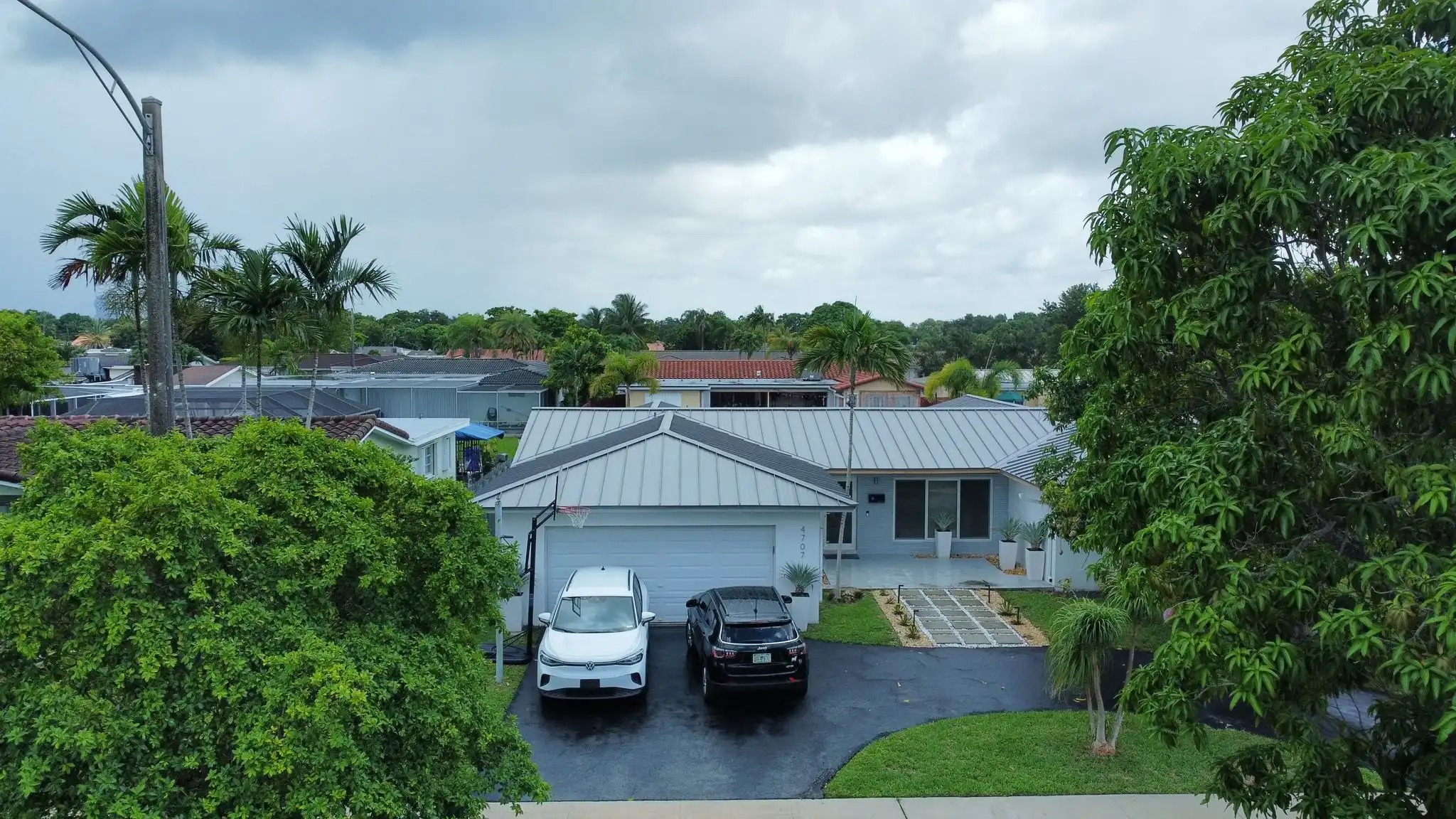
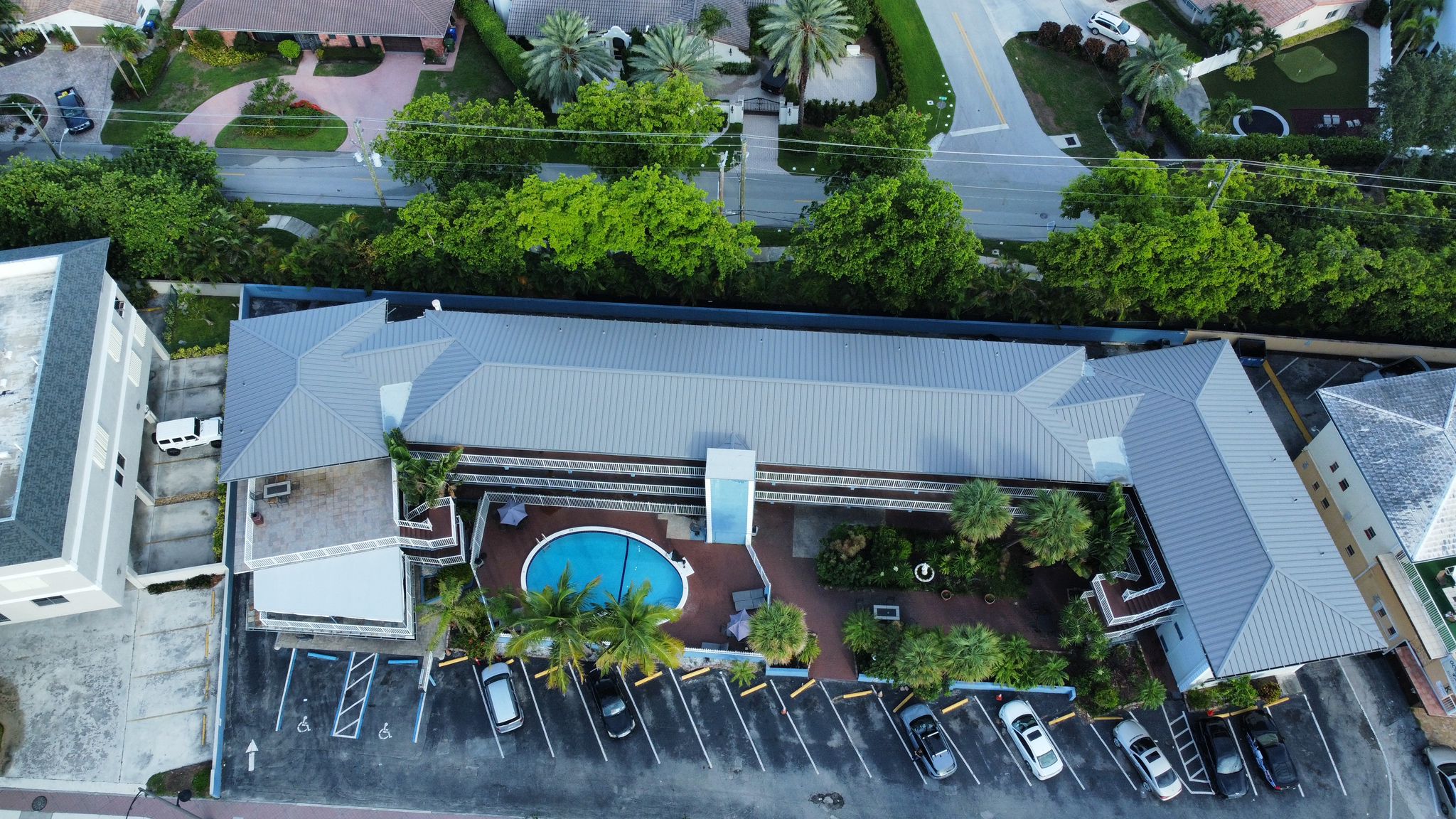
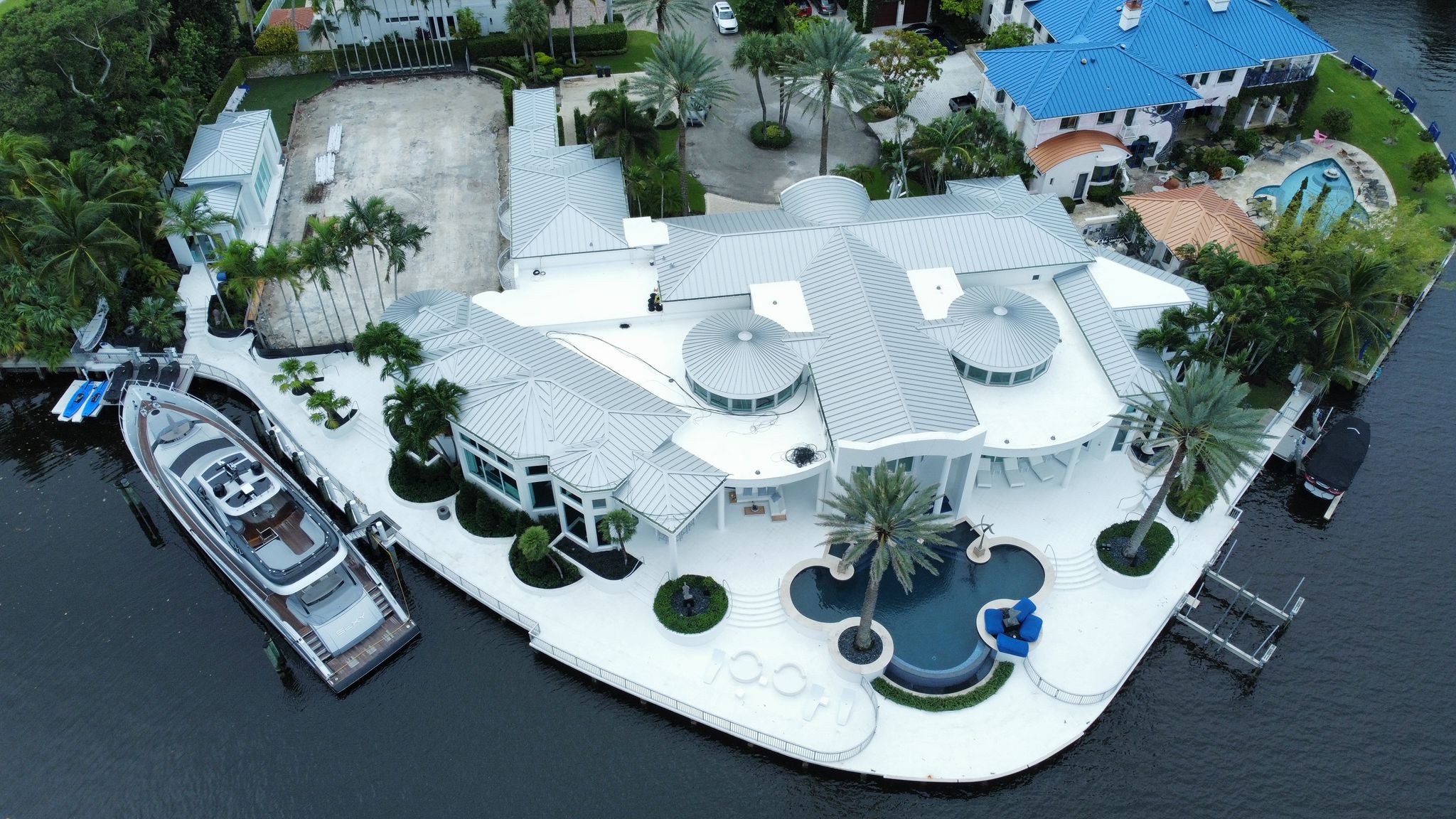
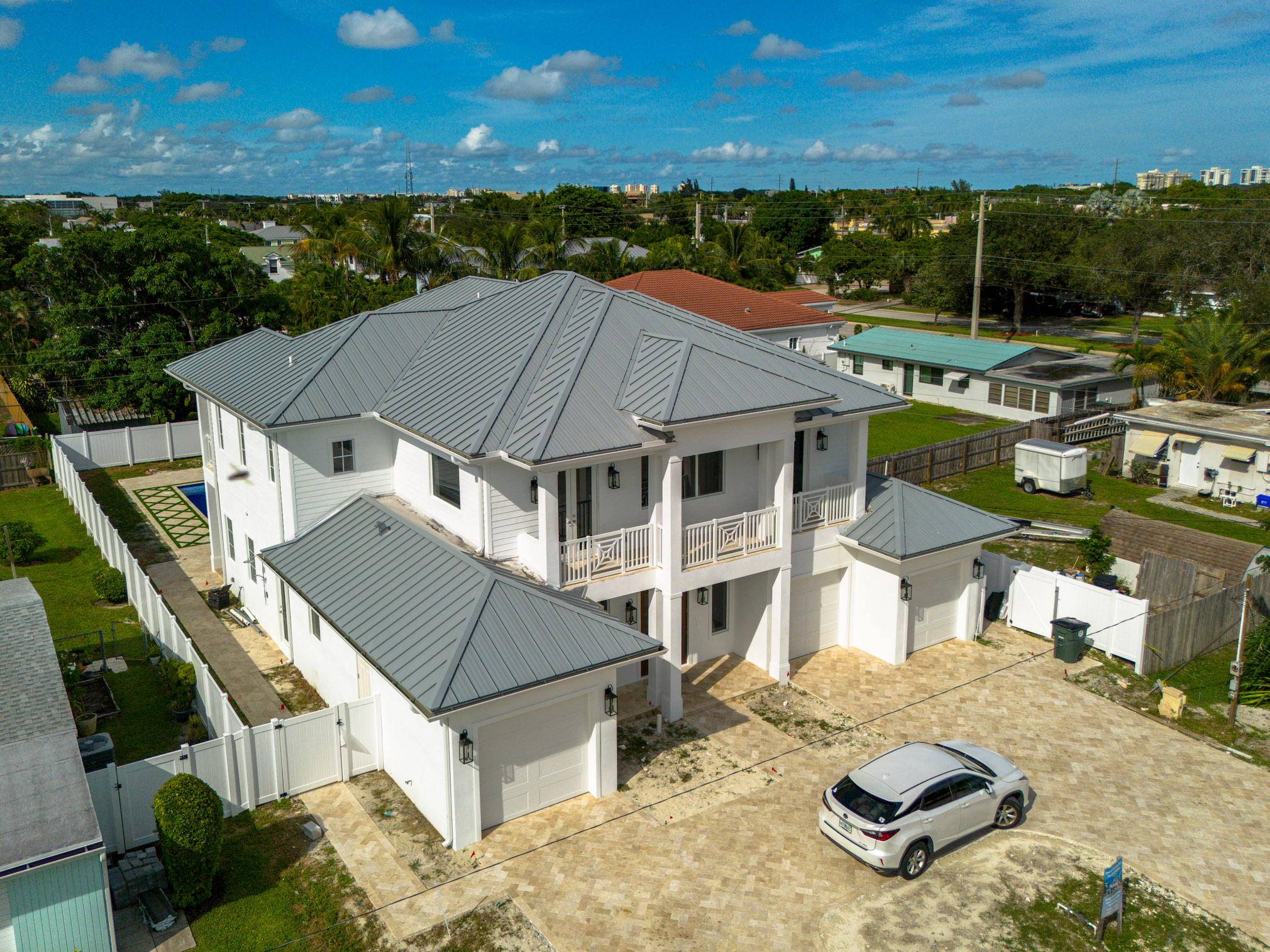
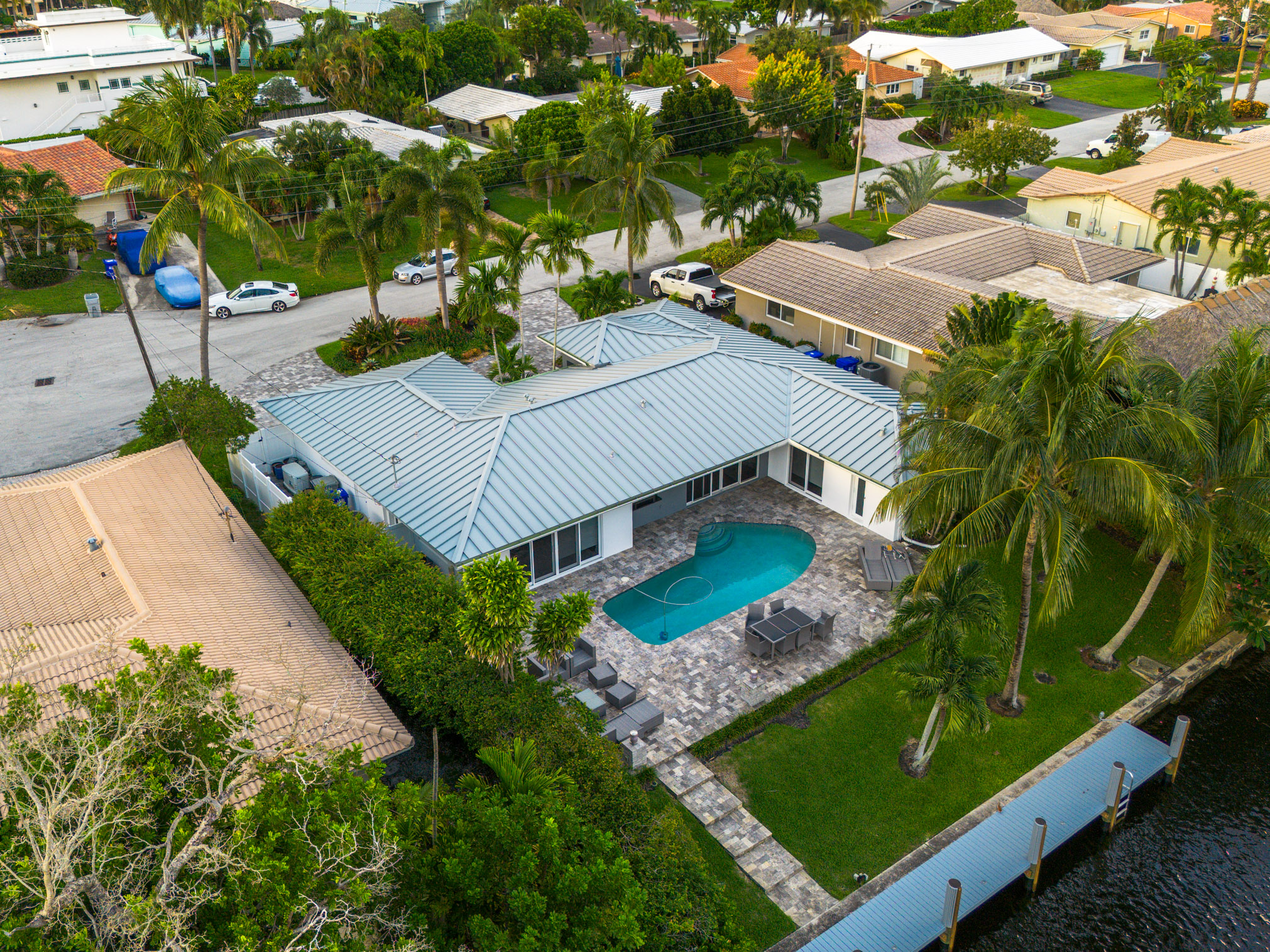
A standing seam metal roof is one of the most durable, weather-resistant, and visually distinctive roofing systems available. Its clean vertical lines complement contemporary and traditional architecture, while its concealed fasteners help protect the roof against water intrusion and premature wear.
For property owners in South Florida, these qualities are especially important. A roof must withstand intense sunlight, wind-driven rain, high humidity, salt-air exposure in coastal areas, and the possibility of tropical storms and hurricanes.
When properly designed and professionally installed, a standing seam metal roof can provide decades of protection with relatively low maintenance.
In this guide, we explain how standing seam metal roofing works, its advantages and disadvantages, available materials and panel options, installation requirements, maintenance needs, and what to consider before hiring a roofing contractor.
What Is a Standing Seam Metal Roof?
A standing seam metal roof is constructed using long metal panels that typically run vertically from the roof’s ridge to the eaves. The edges of neighboring panels connect at raised seams that sit above the flat surface of the roof.
This design helps rainwater flow down the panels and away from the roof without passing over exposed horizontal joints.
One of the system’s most important features is its concealed attachment method. Clips or fasteners secure the panels beneath the seams instead of penetrating the exposed face of the roof. This creates a clean appearance and protects most fasteners from direct exposure to rain, ultraviolet light, and temperature changes.
Standing seam roofing should not be confused with exposed-fastener metal roofing. Exposed-fastener systems use visible screws with washers installed through the face of each panel. Although these systems may be appropriate for certain buildings and budgets, they generally require more frequent inspections because the exposed screws and washers can loosen or deteriorate over time.
How Does a Standing Seam Metal Roof Work?
A standing seam metal roofing system consists of several coordinated components:
- Metal panels that form the visible roof surface and direct water toward the drainage system
- Raised seams that connect neighboring panels above the main drainage plane
- Clips and concealed fasteners that secure the panels to the roof deck
- Underlayment that provides a secondary layer of water resistance
- Flashing and trim that protect ridges, valleys, eaves, walls, skylights, vents, and other penetrations
- A properly prepared roof deck that supports the entire roofing assembly
Metal naturally expands when heated and contracts as it cools. South Florida roofs experience significant temperature changes between direct sunlight, heavy rain, and nighttime conditions.
A properly designed clip system allows the metal panels to move without placing unnecessary stress on the seams, fasteners, or surrounding roof components.
Types of Standing Seam Metal Roof Panels
Not every standing seam roofing system is the same. The panel profile and seam-locking method should be selected based on the building, roof slope, wind exposure, engineering requirements, and manufacturer specifications.
Snap-Lock Panels
Snap-lock panels have interlocking seams that snap together during installation. They provide a clean appearance and efficient installation and are commonly used on roofs with an appropriate slope.
The specific snap-lock system must be approved for the property’s roof design and wind conditions.
Mechanically Seamed Panels
Mechanically seamed panels are joined using specialized seaming equipment after the panels have been installed. Depending on the system, the seams may be folded once or twice.
Mechanically locked systems are often selected for lower-slope roofs or projects requiring enhanced resistance to wind and water.
Nail-Flange or Nail-Strip Panels
Nail-flange panels include a fastening strip along one side of the panel. The next panel covers the fasteners, creating a concealed-fastener appearance.
However, nail-flange systems may not offer the same ability to accommodate thermal movement or the same performance range as clip-attached systems. The product approvals and installation limitations should be reviewed carefully before this type of system is selected.
Common Standing Seam Metal Roofing Materials
Standing seam roofing is available in several materials. The best option depends on the property’s location, budget, architectural style, and exposure conditions.
Galvalume-Coated Steel
Steel coated with an aluminum-zinc alloy is widely used for standing seam roofing because it offers a strong combination of durability, availability, and value.
A high-quality painted finish provides additional protection and allows property owners to choose from a broad range of colors.
Aluminum
Aluminum is naturally resistant to corrosion, making it particularly useful for coastal properties exposed to salt air.
It is lightweight and does not rust. However, aluminum may cost more than steel and requires appropriate handling, fastening, and flashing details.
Copper
Copper provides a premium architectural appearance and develops a distinctive patina over time. It can offer exceptional longevity, but its material cost and specialized installation requirements make it one of the most expensive roofing options.
Zinc
Zinc is another premium roofing material capable of developing a protective patina. It offers a unique appearance and long service potential but is less commonly used and requires a contractor familiar with its installation characteristics.
Why Metal Thickness Matters
Metal thickness is commonly expressed as gauge for steel and as a decimal measurement for aluminum. With steel, a lower gauge number generally means a thicker panel.
However, gauge alone does not determine how well a roof will perform.
Allied Roofing & Sheet Metal installs premium 24-gauge steel and .032 or .040 aluminum standing seam systems. We do not offer 26-gauge standing seam roofing.
Thicker metal generally offers greater rigidity and improved resistance to deformation. However, a standing seam roof must be evaluated as a complete system. The following factors also affect its performance:
- Panel profile and width
- Seam design and height
- Clip type and spacing
- Fastener selection
- Roof deck and substrate
- Underlayment
- Engineering requirements
- Product approvals
- Flashing details
- Installation quality
A thicker metal panel cannot compensate for an incorrectly designed or poorly installed roofing system.
Benefits of Standing Seam Metal Roofing
Long Service Life
A professionally installed standing seam metal roof can provide several decades of service. Its actual lifespan depends on the metal, protective coating, environment, roof design, maintenance, and quality of installation.
Although the initial investment is higher than for many traditional roofing materials, the longer potential service life may provide better long-term value.
Concealed Fasteners
Because most fasteners are protected beneath the panels, they are less exposed to rain, ultraviolet radiation, and repeated temperature changes.
This eliminates many of the vulnerable points associated with exposed-fastener metal roofing.
Strong Weather Performance
Standing seam systems can be engineered for demanding wind and rain conditions. This is particularly important in South Florida, where roofs may be exposed to severe thunderstorms, tropical storms, and hurricanes.
However, a metal roof should never be described as automatically hurricane-proof. Its performance depends on the approved roof assembly, engineering, attachment method, fasteners, panel profile, edge details, roof deck, and installation quality.
Effective Water Shedding
Raised seams and continuous panels help move water efficiently away from the roof.
Careful detailing is still required around valleys, walls, transitions, curbs, skylights, vents, mechanical equipment, and other roof penetrations.
Relatively Low Maintenance
Standing seam roofing does not contain exposed fasteners throughout the main panel area. This reduces one of the common maintenance concerns associated with exposed-fastener roofing.
The system still requires periodic professional inspections, especially after severe weather.
Energy-Efficiency Potential
Metal roofing can reflect a portion of the sun’s energy, particularly when it has a suitable reflective coating and color.
Actual energy performance also depends on the building’s insulation, ventilation, roof geometry, color, coating, and complete roofing assembly. Property owners should review the product’s current performance ratings instead of selecting a roof based on color alone.
Modern Architectural Appearance
The narrow vertical seams and broad, flat panels create a clean and refined appearance.
Standing seam roofing works well on:
- Single-family homes
- Luxury residences
- Townhomes
- Offices
- Retail properties
- Community buildings
- Warehouses
- Other commercial properties
It can complement contemporary, modern farmhouse, coastal, Mediterranean, and traditional architecture.
Recyclability
Metal roofing contains recyclable material and can generally be recycled at the end of its useful life. The amount of recycled content varies by manufacturer and product.
Potential Disadvantages of Standing Seam Metal Roofing
Standing seam roofing is an excellent system, but it is not automatically the right choice for every property.
Higher Initial Cost
The materials, fabrication, engineering, flashing, and specialized labor generally cost more upfront than standard asphalt shingles.
Comparing only the initial price may be misleading because it does not account for potential longevity and maintenance. However, property owners must still decide whether the investment fits their budget and expected period of ownership.
Specialized Installation Requirements
Small errors in panel layout, clip installation, flashing, fastener placement, or seam formation can lead to leaks, restricted thermal movement, visible distortion, or wind-performance problems.
The roofing contractor should have documented experience installing the specific type of standing seam system being proposed.
Oil Canning
Oil canning is the visible waviness that may appear in the flat portion of a metal panel. It is primarily an aesthetic condition and does not necessarily mean the roof is defective.
Several factors can influence its appearance:
- Panel width
- Metal thickness
- Roof-deck flatness
- Panel fabrication
- Installation methods
- Temperature
- Handling and storage
- Reflective lighting conditions
Narrower panels, thicker metal, striations, and proper handling may help reduce oil canning. However, no responsible contractor should promise that it will never occur.
Noise Concerns
Rain may sound louder on metal installed over an open framing system.
On a typical home with a solid roof deck, underlayment, attic space, insulation, and finished ceilings, the difference is usually much less noticeable. The complete roof and ceiling assembly determines interior sound levels.
Specialized Repairs and Modifications
Future work involving solar panels, mechanical equipment, satellite dishes, or other penetrations should be performed by qualified professionals using compatible attachment and flashing systems.
Unplanned or improperly sealed penetrations can compromise the roof and may affect its warranty.
Is Standing Seam Roofing a Good Choice for South Florida?
Standing seam metal roofing can be an excellent choice for South Florida properties when the system is selected and installed for the building’s specific conditions.
South Florida roofs may be exposed to:
- High wind pressures
- Wind-driven rain
- Severe thunderstorms
- Tropical storms and hurricanes
- Strong ultraviolet radiation
- High roof-surface temperatures
- Heavy seasonal rainfall
- High humidity
- Salt-laden coastal air
- Airborne debris and falling branches
The correct system cannot be selected based on appearance alone.
The roofing contractor must evaluate the property’s location, building height, roof slope, roof-deck condition, panel length, wind exposure, drainage, penetrations, perimeter zones, attachment requirements, and approved installation details.
For coastal properties, material selection and fastener compatibility are especially important.
Aluminum may be recommended for certain high-salt environments, while properly specified coated steel can be appropriate for many other properties. Dissimilar metals must be managed carefully because certain combinations can contribute to galvanic corrosion.
How to Choose a Standing Seam Metal Roofing Contractor
Before signing a roofing contract, ask the contractor the following questions:
- Do you regularly install standing seam metal roofing?
- Which manufacturer and exact panel system are you proposing?
- What type of metal is included?
- What metal thickness will be installed?
- What are the panel width and seam height?
- Which paint system or finish is included?
- Is the system appropriate for my roof slope and location?
- Which product approval or engineered assembly will be used?
- How will the panels accommodate expansion and contraction?
- How will valleys, walls, vents, skylights, and other penetrations be flashed?
- Who will fabricate the panels and custom trim?
- Are permits and engineering included?
- Are tear-off and disposal included?
- How will damaged roof decking be handled?
- What manufacturer and workmanship warranties apply?
- What exclusions or maintenance requirements apply to the warranties?
- How will the roof be protected if solar panels are installed later?
- Can you provide examples of similar completed projects?
A detailed written proposal should identify the actual materials, system, and scope.
Frequently Asked Questions About Standing Seam Metal Roofing
How long does a standing seam metal roof last?
A high-quality, professionally installed standing seam system can last for several decades.
The exact lifespan depends on the roofing material, coating, environmental exposure, roof design, maintenance, and installation quality.
Can a standing seam metal roof withstand a hurricane?
No roof is completely hurricane-proof.
However, a standing seam roof can be designed for high-wind conditions when it includes the correct panel profile, product approvals, engineering, clip spacing, fasteners, substrate, edge details, and professional installation.
The roofing system must be evaluated for the specific building and location.
Does a metal roof attract lightning?
Metal roofing does not increase the likelihood that a building will be struck by lightning.
If a building requires a lightning-protection system, it should be designed for the complete structure by a qualified professional.
Will a metal roof rust near the ocean?
Material selection is critical near saltwater.
Aluminum does not rust and may be preferred for certain coastal properties. Coated steel systems require the correct product, finish, fasteners, detailing, handling, and maintenance for the intended environment.
Can solar panels be installed on a standing seam roof?
Yes. Many solar mounting systems can attach directly to the standing seams without penetrating the main roof panels.
The roofing contractor, roof manufacturer, and solar installer should coordinate to confirm compatibility, attachment locations, structural requirements, and warranty conditions.
Can standing seam roofing be installed on a low-slope roof?
Certain mechanically seamed systems are designed for relatively low roof slopes.
However, the permitted minimum slope varies by product and assembly. The panel system must be selected according to the roof slope, drainage conditions, manufacturer instructions, product approvals, and applicable building-code requirements.
Is standing seam metal roofing worth the investment?
Standing seam metal roofing is often worth considering for property owners who prioritize durability, weather performance, reduced maintenance, architectural appearance, and long-term value.
It may be less suitable when obtaining the lowest possible initial price is the main objective or when the owner does not expect to keep the property long enough to benefit from the system’s potential longevity.
Request a Standing Seam Metal Roof Estimate in South Florida
Standing seam metal roofing is a high-performance system, but its success depends on correct design, quality materials, accurate fabrication, and experienced installation.
Allied Roofing & Sheet Metal, Inc. installs premium standing seam roofing systems for residential and commercial properties throughout South Florida. Depending on the property and project requirements, we offer 24-gauge steel and .032 or .040 aluminum standing seam roofing systems.
If you are considering a metal roof, contact Allied Roofing & Sheet Metal to schedule a professional roof evaluation and receive a detailed proposal for your property.
Contact Allied Roofing & Sheet Metal today to request your standing seam metal roofing estimate