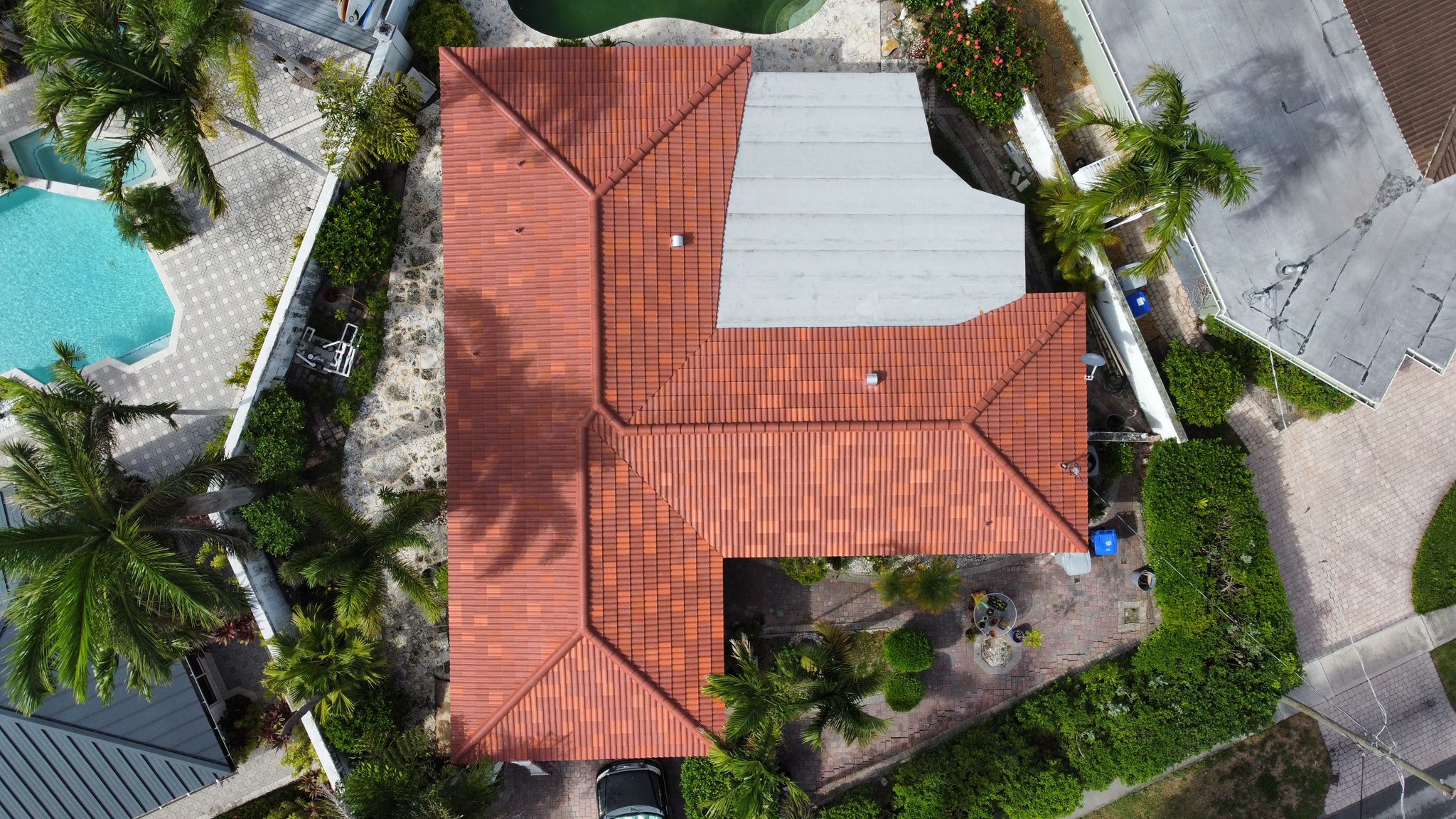
Many homeowners in South Florida eventually need tile roof underlayment replacement in Florida because the waterproof layer beneath the tiles deteriorates over time. Even when concrete or clay roof tiles still look beautiful from the street, the underlayment underneath may be worn out and no longer protecting the home from water intrusion.
This hidden waterproof barrier is one of the most important components of a tile roofing system. Once it begins to fail, leaks can develop during heavy rain, even though the tiles themselves appear to be in excellent condition. Understanding when tile roof underlayment replacement in Florida is necessary can help homeowners avoid costly interior damage and plan for repairs before problems become more serious.
At Allied Roofing & Sheet Metal, Inc., we specialize in premium tile roof inspections and replacements throughout South Florida, including Boca Raton, Parkland, Lighthouse Point, Fort Lauderdale, and surrounding communities.
The Tiles Are Usually Not the Problem
One of the biggest misconceptions homeowners have is that cracked or aged tiles are the main reason a roof leaks. In reality, concrete and clay tiles can often last 50 years or more when properly maintained.
The component most likely to fail first is the underlayment installed beneath the tiles. Depending on the material originally used and the quality of installation, this layer typically lasts between 20 and 30 years in South Florida.
This means your roof may begin leaking long before the tiles themselves need to be replaced.
Why South Florida Tile Roofs Fail Prematurely
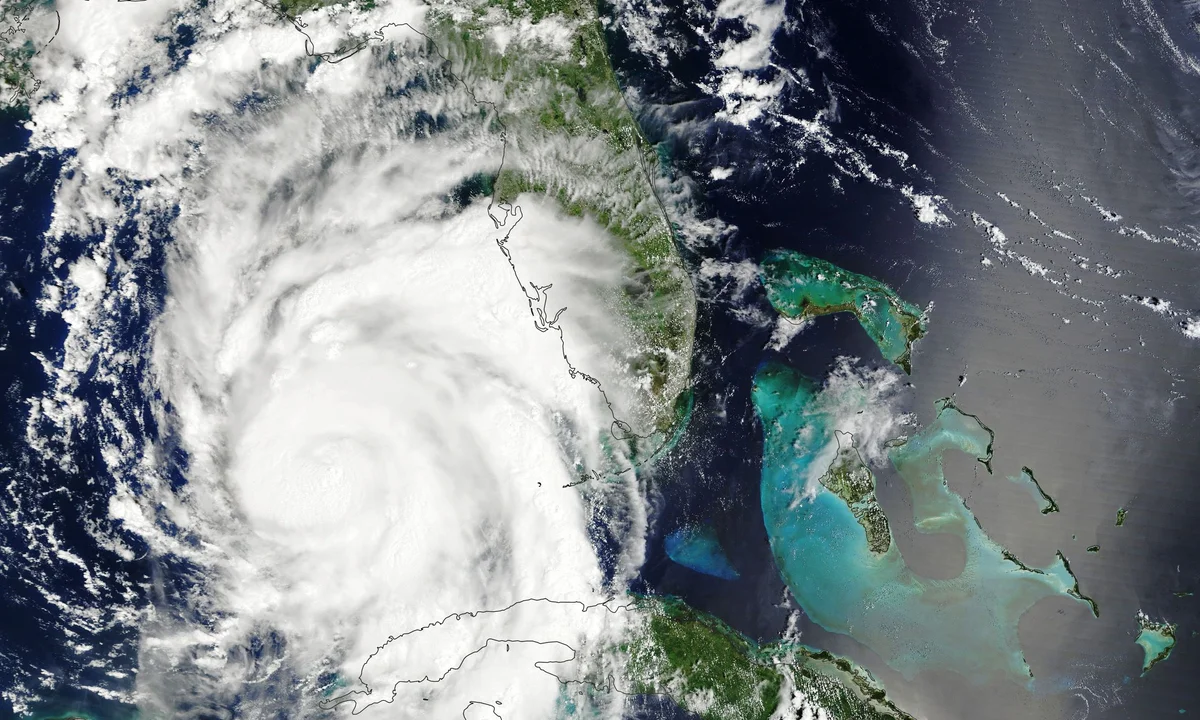
South Florida presents one of the harshest environments for roofing systems in the United States. Several factors accelerate deterioration.
Intense UV Exposure
Year-round sunlight and high temperatures gradually dry out and weaken roofing materials.
Heavy Rain and Moisture
Frequent storms and humidity can expose vulnerable areas around valleys, flashings, and penetrations.
Hurricanes and Strong Winds
Wind uplift can loosen tiles and create hidden damage beneath the roof surface.
Salt Air Near the Coast
Homes near the ocean in areas such as Lighthouse Point and Fort Lauderdale are exposed to salt-laden air, which accelerates corrosion of metal components.
Foot Traffic
Walking on tile roofs without proper care can crack tiles and disturb the underlayment.
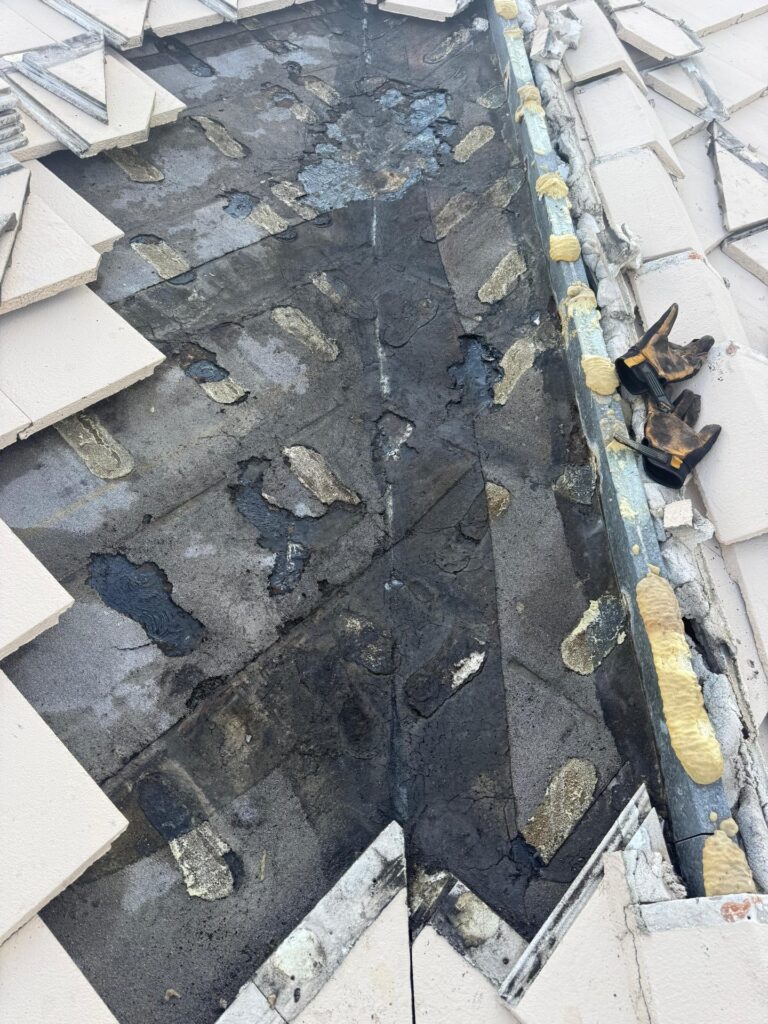
Common Signs Your Tile Roof May Be Failing
If your tile roof is more than 20 years old, watch for these warning signs:
- Water stains on ceilings or walls
- Active roof leaks during heavy rain
- Broken, slipped, or missing tiles
- Rusted flashing or valleys
- Mold or mildew in the attic
- Previous repairs becoming more frequent
- Roof age exceeding 25 years
Even small leaks can indicate that the underlayment is reaching the end of its useful life.
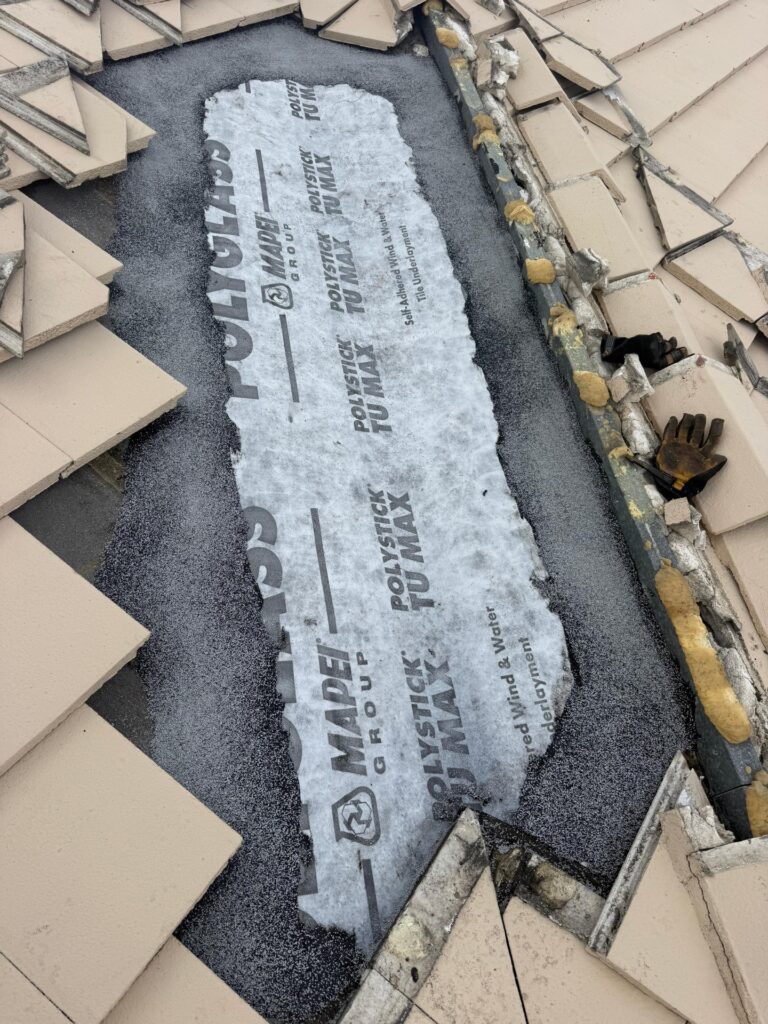
How Long Does Tile Roof Underlayment Last in Florida?
The lifespan of tile roof underlayment depends on the type of material used, installation quality, and environmental exposure.
Typical life expectancy in South Florida:
- Standard felt underlayment: 15–20 years
- Modified bitumen peel-and-stick systems: 20–30 years
- Premium high-performance systems: 30+ years
Many homes built in the 1990s and early 2000s are now reaching the point where underlayment replacement is necessary.
Signs You Need Tile Roof Underlayment Replacement in Florida
If your roof is more than 20 years old, watch for these warning signs:
- Water stains on ceilings or walls
- Leaks during heavy rain
- Broken or slipped tiles
- Rusted valleys or flashings
- Mold or mildew in the attic
- Increasing frequency of repairs
- Roof age exceeding 25 years
These symptoms often indicate that the waterproof layer beneath the tiles has reached the end of its useful life.
Can Roof Tiles Be Reused?
In many cases, yes.
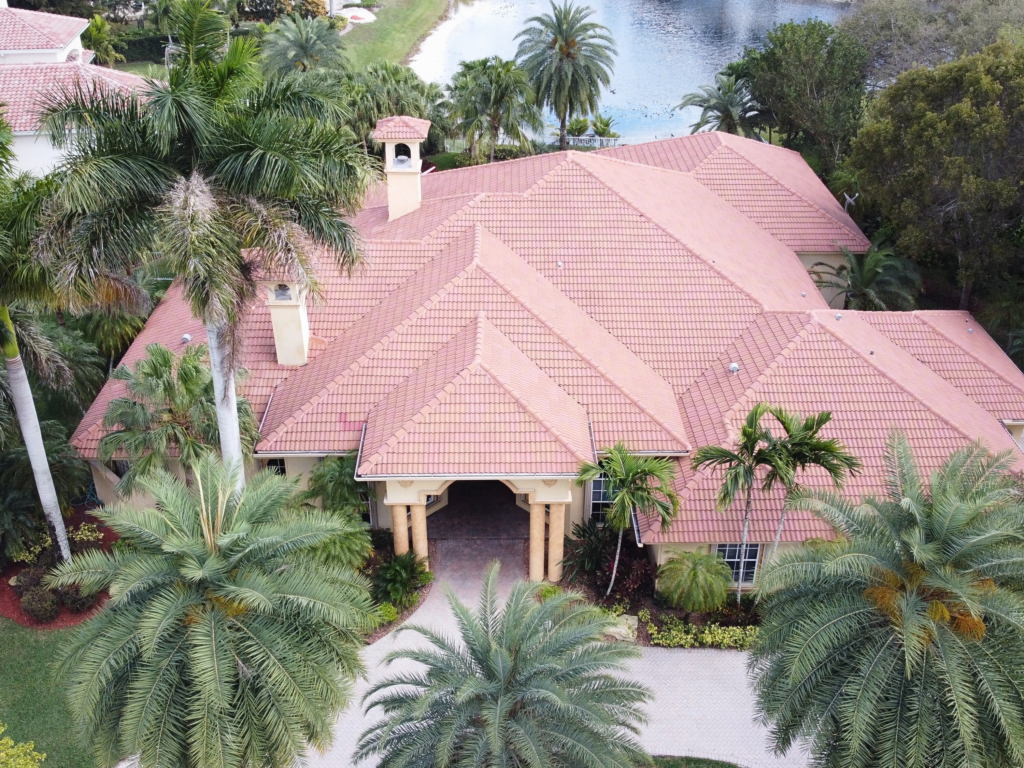
If the existing tiles are in good condition and compatible replacements are available for any broken pieces, the tiles can often be carefully removed and reinstalled over a new waterproof system.
Reusing tiles can preserve the original appearance of the home while significantly reducing material costs.
However, not all roofs are good candidates for tile reset. The final recommendation depends on tile condition, breakage rate, and product availability.
Repair vs. Full Tile Roof Replacement
A localized repair may be appropriate if the leak is isolated and the underlayment is otherwise in good condition.
A full replacement or tile reset is usually the better long-term solution when:
- The roof is over 20–25 years old
- Multiple leaks are occurring
- Underlayment has become brittle
- Flashings and valleys are deteriorated
- Repairs are becoming increasingly frequent
At a certain point, continuing to patch an aging roof becomes less cost-effective than replacing the waterproof system entirely
Why Homeowners Choose Allied Roofing
Allied Roofing & Sheet Metal, Inc. specializes in premium tile roof replacements throughout South Florida. Our team has extensive experience with concrete and clay tile systems and understands the unique challenges posed by Florida’s climate and building codes.
Homeowners choose Allied Roofing because we provide:
- Detailed roof inspections
- Honest recommendations
- High-quality waterproofing systems
- Professional project management
- Clear communication throughout the process
- Strong workmanship warranties
We proudly serve Boca Raton, Parkland, Lighthouse Point, Fort Lauderdale, Coral Springs, Deerfield Beach, and surrounding communities.
Schedule a Professional Tile Roof Inspection
If your tile roof is more than 20 years old or you have noticed leaks, it may be time for a professional evaluation.
Early detection can prevent interior damage and help you plan for repairs or replacement before problems become more serious.
Contact Allied Roofing today to schedule a comprehensive tile roof inspection and receive expert guidance tailored to your home and budget.